

Menu
Are you getting the most out of your email marketing strategy? You can if you know these 10 email marketing habits to break.
Bad habits are notoriously difficult to break, as anyone with a smoking habit can probably tell you.*
Habits are rooted in routine, and having a routine is comfortable, familiar, and predictable.
But just because habits are predictable doesn’t mean they’re best for you or for your subscribers.
In this post, I’ll list down 10 email marketing habits to break to help you develop the best possible email marketing strategy.
*I may or may not be speaking from experience.
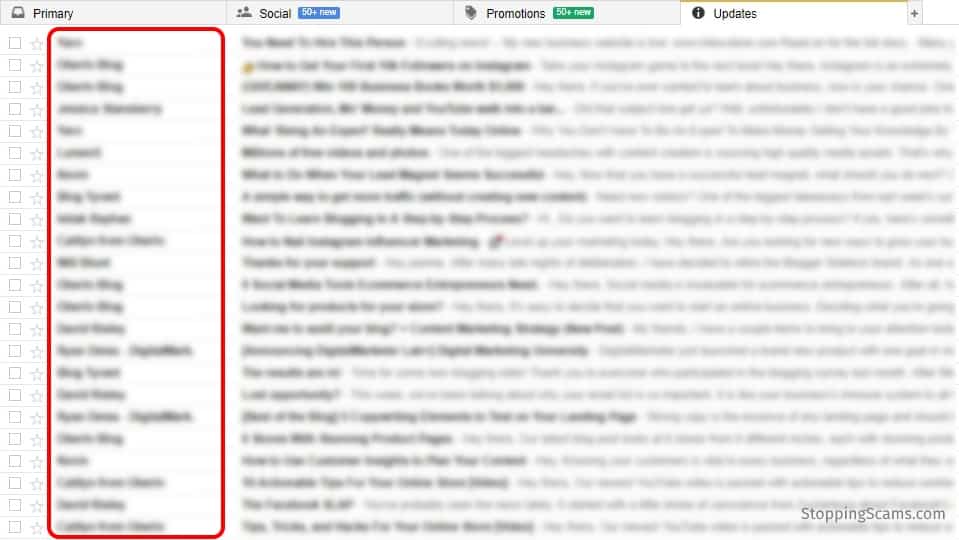
First, let me point out where the sender name or “from” name is on your subscriber’s inbox.
Click To Zoom
It’s likely the first thing you see when you log in to your email, and it’s normally displayed first on your mobile or computer notifications.
You want to make it absolutely clear who the email is from, and so you probably put something like your website name (e.g., “Stopping Scams”) or your full name (e.g., “JoAnne D.”).
So you’re probably like, “what’s wrong with that???”
It’s not a particularly bad habit, but neither one is friendly or immediately informative to your email recipient.
For instance, your website name alone doesn’t tell the recipient much. If you run a blog, then they’ll probably think that this is a newsletter, but if you run an eCommerce site and a blog, it’s hard to tell if you’re emailing about a recent order, a product launch, or regular updates.
Your name alone isn’t very helpful, either. Unless you’re on a first-name basis with your recipient, they’re going to wonder who you are and how you got their email address in the first place. This isn’t a very good way to start a conversation, and the recipient will probably just ignore it.
Experimenting with different sender names can actually improve your open rates (that is, the percentage of your recipients who open your emails versus those who don’t).
I’m not saying you should deceive your subscribers by using a fake name. After all, you do need to comply to the CAN-SPAM Act, where not using a false name is literally the first guideline.

But you can still comply with the CAN-SPAM Act and improve your open rate even if you tweak your sender’s name. To do this, you can use what’s known as a “friendly from.”
Friendly froms aren’t really about being friendly to your subscribers in the literal sense. It’s about being crystal clear about who you are and why you’re emailing them so that they’re compelled to open your email among the numerous emails they’ve likely received that day.
For example, instead of simply sending emails from “Stopping Scams,” you can input your sender name as “JoAnne at Stopping Scams” or “JoAnne from StoppingScams.com.” If you have a team, you can include a designation, such as “JoAnne, Content Writer at Stopping Scams.”
Test out different versions of your sender name to find what works best with your subscribers. Their preference, as shown by the data you collect, may also change over time, so do your tests periodically.
Break the habit: Use “friendly froms” and test which ones increase your open rates.
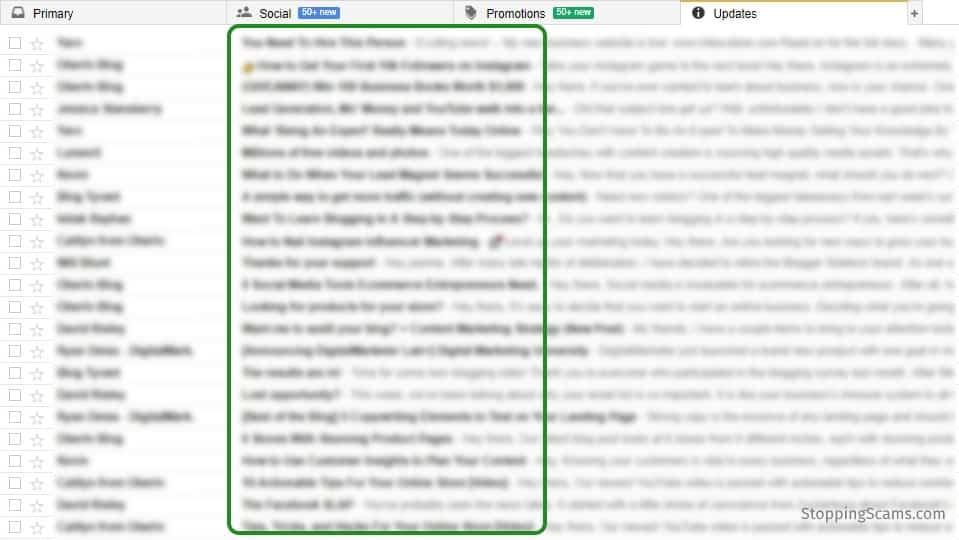
Next to your “From” or sender name, your subscriber sees the subject immediately beside it or below it, depending on the device they’re using.
Click To Zoom
When you’re writing all sorts of email series and campaigns, it’s tempting to go for the subject line that requires the least amount of effort. But the subject line presents a great opportunity to compel your subscribers to open your email.
Write your subject lines with the same care and consideration as you write your blog post or landing page headlines. Keep in mind that you’re competing with other companies’ emails for attention, so writing a subject line that stands out will do a lot to get you noticed and increases the chances that your email is opened.
The good news here is that you can be more creative in your email subject lines than you normally are in your blog post headlines. This is because an email inbox is a more personal space.
Experiment with using all caps, symbols, or even emojis in your subject line. You can even add personalization (you should be doing this anyway) and inject some humor in your subject line.

Click To Zoom
It’s important to note here that having an accurate subject line doesn’t mean it has to be lackluster. Similarly, having creative license doesn’t give you permission to be misleading.
Break the habit: Tweak the subject line copy and design to inspire more subscribers to open your emails.
After the sender name and the subject line, the next thing your subscribers will see is the preview text.
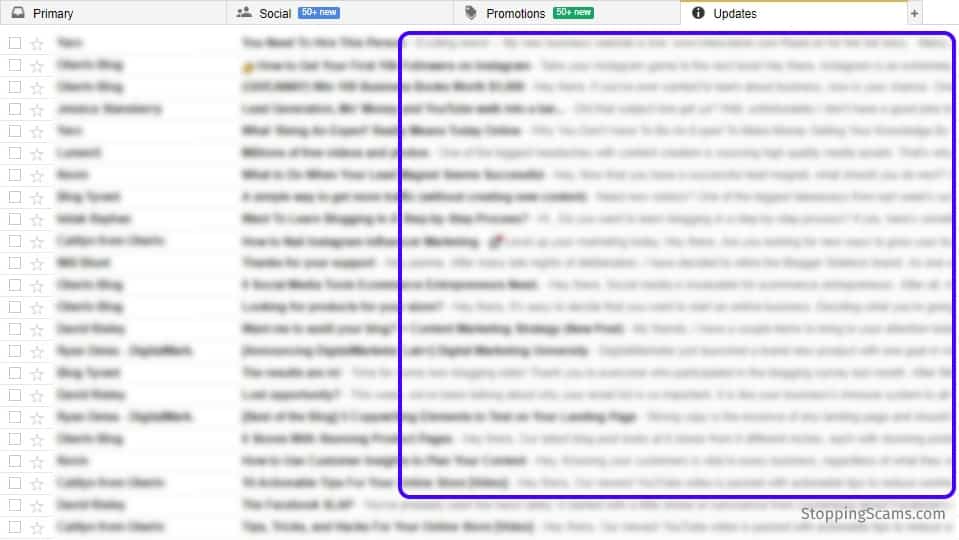
Again, depending on the device they’re using, they might see the preview text below the sender and subject.
Email clients like Gmail and Outlook pull a snippet of text from the email, usually from the first few lines of text found within an email. If you’ve put careful thought to what you place in these first few lines of text, then changing or adding to it won’t be necessary.
However, the problem lies when the first text that email clients get from your email is an alt text of an image, or random instructions (e.g., “Having trouble viewing this email?” or “Forward to a friend”). These alt texts and instructions are important parts of your email, but having them in your preview text isn’t ideal.
You can place a sentence of more compelling text at the beginning of your email so email clients can pick those up and show them instead.
But sometimes, it isn’t always possible. You might want to send an images-only email, or it might be simply because you don’t want text at the very top of your email.
In these cases, you can define the text you want to display in your subscriber’s inbox while opting to not display it in the body of your actual email. You can visit the help or support site of your email service provider because the process may differ, but generally speaking, it only involves inserting a short line of HTML code.
Here are some tips to make your preview text compelling:
Break the habit: Optimize the preview text of your emails.
If you’re running a one-man (or one-woman) show and you’re writing all emails to your subscribers by yourself, there’ll be a point when everything feels mechanical, and you find yourself using a tried-and-tested formula or template just to get through the day and get these emails over and done with.
I get it. Believe me, I get it.
However, keeping this habit up won’t do you any good in the long run. If you’re uninspired, your emails will show it. People won’t want to read that, even if your information is useful, even if your offering a good bargain, if your writing puts them to sleep, they just won’t be interested.

If your subscribers are like this when reading your emails, something needs to change!
It’s email. It’s supposed to be more personal and more of a conversation than ordinary marketing copy. It’s less “talking to” your subscribers and more “talking with” them.
Your subscribers need to feel that it’s an actual human person talking to them. From the most intimate plain-text emails with just a story of how your day has been, to promotional emails that introduce your newest product offering, you need to write in a voice that’s distinctly, unmistakably you.
To do that, you need to find a writer’s voice that rings with authenticity and is something that your readers will relate to. They need to feel like they’re talking to someone they can trust who is vulnerable at the same time.
Here are some tips so you can find your writer’s voice.
Once you’ve found your writer’s voice, it’s your job to nurture and develop it. Having an excellent writer’s voice is crucial in writing emails that are actually opened and read.
Break the habit: Find and develop your writer’s voice.
It’s not only the way you write that can be boring; it can also be the form and design of your emails.
You might have found that your promotional emails work best if they’re structured as text-image-text-CTA button, or that your newsletters work if they’re structured as banner image-text-CTA button. And if it works, it’s tempting to just let it work.
But even if your subscribers have come to expect your emails to be of a certain format, there’s still something to be said about surprising them once in a while.
Play around with the length of your emails. If your emails usually require much scrolling, create short and to the point emails and see how your subscribers take it. Conversely, if they’re used to concise emails, hit them with a lengthy, content-heavy email with a number of different CTAs and gauge their reactions.
You can also test plain-text emails versus image-heavy emails, or have a different color scheme once in a while. Tweak the arrangement of visual elements in your emails to draw your subscribers’ eyes in different directions.
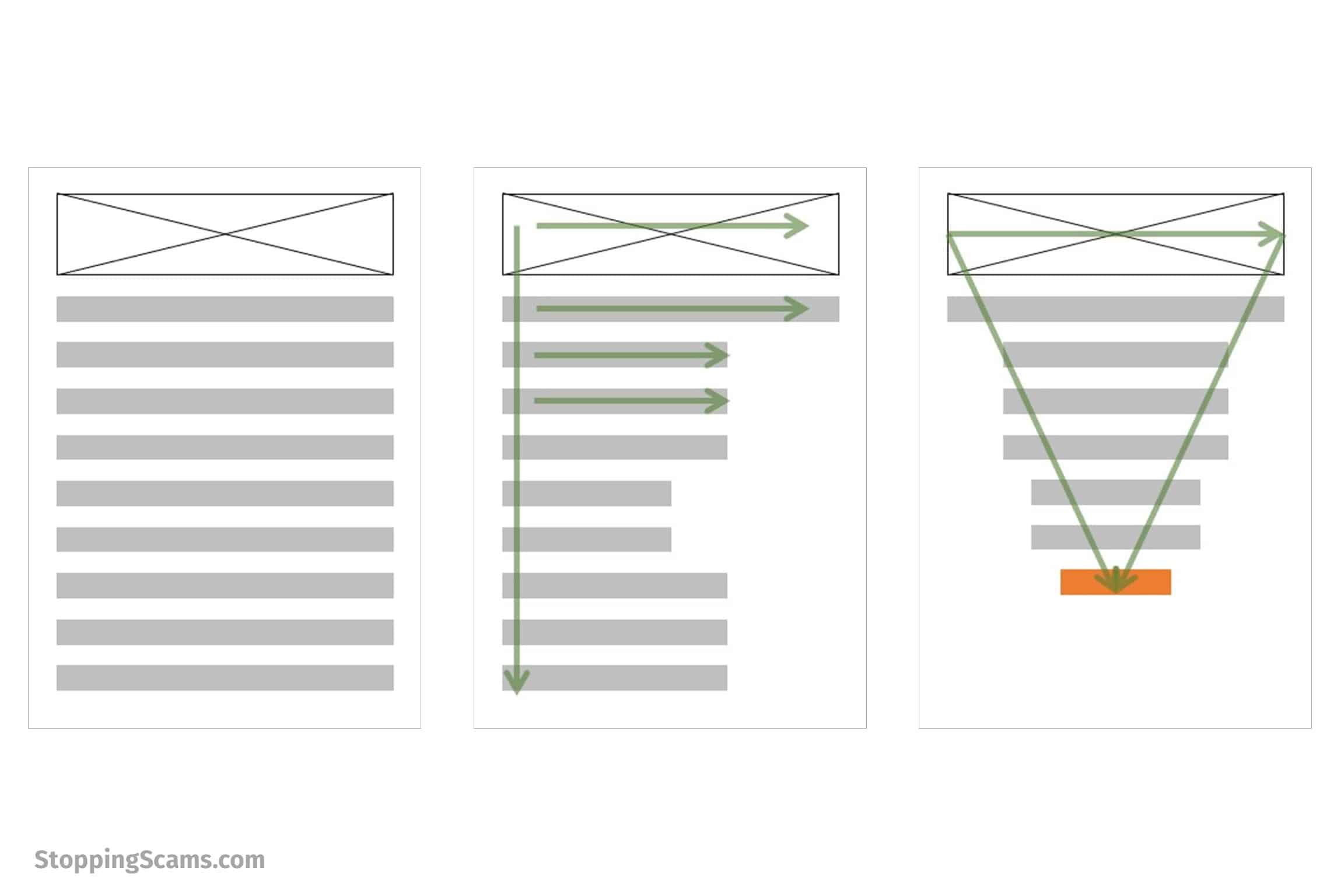
L to R: one-column, F-shaped, inverted pyramid
(Click To Zoom)
Whichever design aspects you want to experiment with in your emails, never lose sight of the fact that content and design should go together. Design should always help your subscribers to consume your content.
Break the habit: Experiment with different content types, length, placement of various elements, etc.
From Email Marketing 101: All your emails should have at least one call to action.
“Learn More.” “Click Here.” “Shop Now.” “Sign Up.”
These are normally simple but effective CTAs that drove people to take action. But these CTAs are used so often that internet users are starting to skim over them when consuming online content.
And that includes your subscribers.
When you find yourself reaching for the same old basic CTAs that you’ve always used, stop. The purpose of CTAs is to immediately make the reader want to do an action. Admittedly, that’s difficult nowadays, especially when you’re competing for attention in today’s crowded space.
So what’s a marketer to do?
Get creative.
Start with the action you want your subscriber to do. For instance, you might want them to read your most recent blog post. The knee-jerk CTA would be “Read More,” but you want to do better than that.
Consider why they should take action. If you reviewed a product, for example, they benefit by knowing what your impressions are and if you think the product is worth buying. So instead of just saying “Read More,” you can say “Find Out If This Product Is Worth The Money.”
The latter is clearer in what they stand to gain from reading the article. This way, you’re not just ordering to do something; you’re pointing out something helpful to them and what they can do to get it.
Practice making your CTAs like this; contextually relevant and benefits-focused instead of being merely focused on the action.
Internet users are wising up. They aren’t going to shop now just because you told them to “Shop Now.” Your CTAs have to wise up with your subscribers.
Break the habit: Take your CTA copy to the next level.
You know that guy (or girl) at a party who never seems to shut up about themselves?
Like when you go home afterward, you realize that you barely talked yet you know all the details about that person’s life, like where they’re from, where they work, how awesome their company is, and even what they had for dinner before the party?
Yeah. Don’t be that guy (or girl).

The problem is, it’s easy to be that guy when you’re doing email marketing. After all, one of the reasons you’re doing email marketing is to let your subscribers know how valuable your information is and how awesome your products are.
But that’s not the only reason why you should be doing email marketing. You want to genuinely connect with your subscribers. To achieve that, you have to be willing to provide value without any sales goal or traffic metric in mind at times.
There are plenty of ways you can do this. You can do a roundup of posts that you know your audience will be interested in that may or may not be related to your niche. Or do a fun, random, getting-to-know-you survey, like what their weekend plans are or what their favorite candy bar is.
It’s important not to come off like you’re trying too hard; you should be genuinely interested in your subscribers’ likes and dislikes, as well as their hopes and goals. When you’re genuinely interested in what they have to say, they’re much more likely to want to know you and what you have to offer.
So yes, there’ll be times that your email won’t do much for your sales or your traffic, but you know what? It does your business good in the long run because you’re building a real relationship with your subscribers by providing a valuable experience.
Break the habit: Include emails in your sending that have no marketing agenda.
One of the crucial aspects of email marketing is email frequency. It’s also one of the most highly-debated.
When you send too many emails, you risk annoyed and disengaged subscribers who either unsubscribe, filter your emails straight to trash, or worse, mark you as a spammer. I mean, it’s bad enough they don’t get to read your emails, but to have them marked as spam and affecting your future emails? That’s cold.
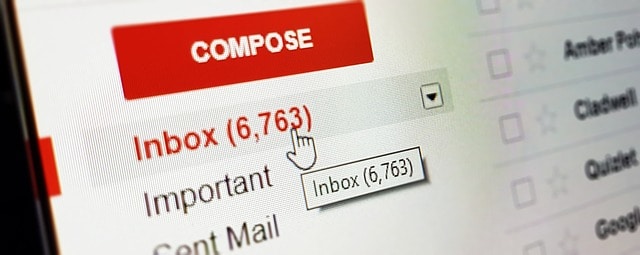
On the other extreme, sending too few emails isn’t really ideal. You can’t build a genuine connection with someone who rarely checks in. Worst-case scenario is they forget who you are and why they signed up in the first place.
But how many emails are “too many” and how many emails are “too few”?
A general rule is you should email at least once a month so your subscribers don’t forget you. However, there are some indications that it’s not so much the frequency; it’s how relevant your email is and if it justifies how often you send them that factors in your subscribers’ decision to unsubscribe.
For example, if you’re sending emails about an unexpected storewide sale, it’s justifiable to interrupt your normal schedule of emails and announce that sale. Similarly, if there aren’t any updates to your blog because of unforeseen events, it’s justifiable to email less often than usual.
Honestly, there isn’t one correct answer or magic formula to compute the ideal frequency of your emails. The best way to address this is to empower your customers to decide this for themselves.
When your subscriber signs up through one of your opt-ins, make it clear exactly how often they can expect to receive emails from you. Whether they’re signing up to monthly newsletter-type emails, or a weekly promotion bulletin, or a daily deal update, always indicate the frequency.
If you do have to step up the frequency for some (valid) reason, always inform your subscribers ahead of time, and in the emails that you’re sending (e.g., “You’re receiving more updates than usual because [reason]”). The best approach is to give them the option to not receive these additional emails if they don’t want to.
Break the habit: Allow subscribers to decide how often they receive your emails, and if possible, which emails they want to receive.
Let’s put this out there: typing up and designing an awesome email is a lot of work.
After creating yet another awesome email for your subscribers, you might think “yeah, I got this.” and just click Send because there’s so much more you need to do today.
You might have gotten away with it for so long, too. But then one of those typos bite you in the butt and you get this:
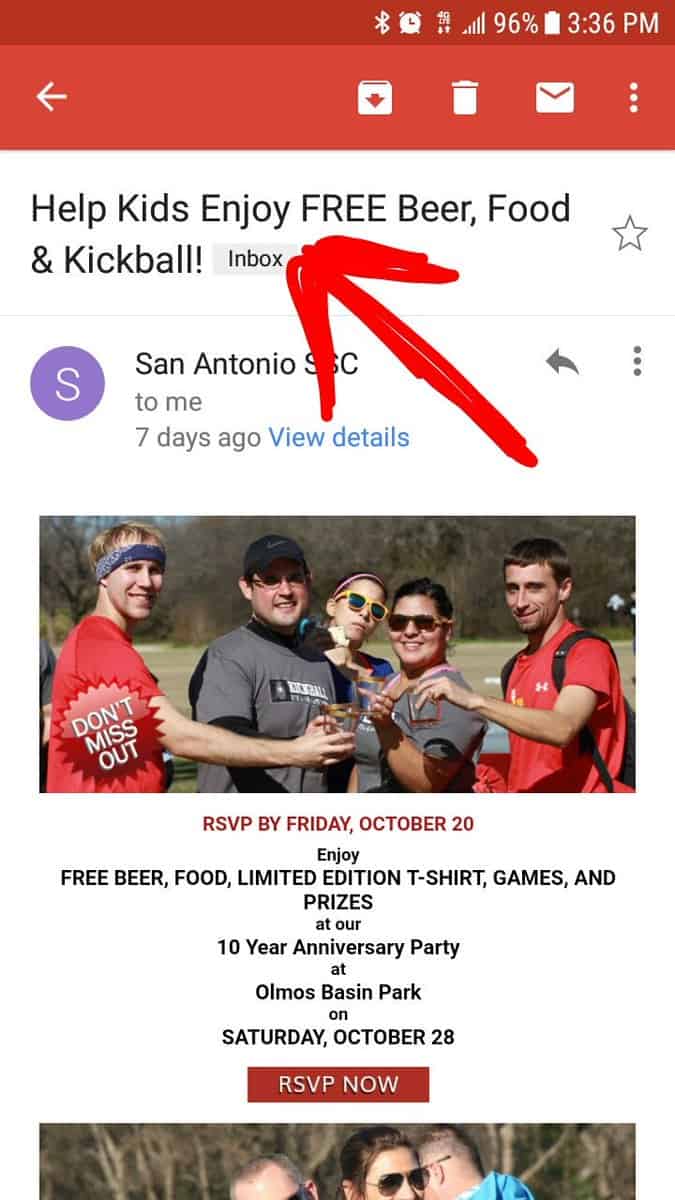
Image from Twitter post (@JoeyGF05)
Lesson: Always, always proofread.
The way you are in your emails represents who you are as a business owner and blogger. If your emails are sloppy, the impression is that you are sloppy, and you’re running a sloppy business. Nobody wants that kind of reputation.
Even minor typos shouldn’t be treated lightly. As we’ve seen, a single comma can make you a laughingstock at best, and your subscribers unsubscribe at worst.
Set aside enough time after creating your emails to proofread them. Send your emails to yourself or a test email first to see how it looks like. If you’re emailing in a language that isn’t your first language, you might want to invest in hiring a freelancer to edit your work.
Break the habit: Always allot time after writing emails to proofread your work.
Okay, so this one is more of a mindset habit than an email marketing one, but let me explain why this is important.
The ability of your subscribers to reply to you is a double-edged sword. On one hand, they can provide you with helpful insight on how you can serve them better. On the other hand, it can be a venue for harmful, toxic feedback.

It isn’t so much a problem when you’re a big company and have a team of people to handle that for you. But if you’re doing this by yourself, and you read emails like “Stop emailing me” or “Who cares? __ and __ are so much better blogs/websites!” or “You’re a scammer!” it can slowly cloud your vision and you start second-guessing yourself and your emailing strategy.
There should always be room for customer feedback, but you need to be discerning about what’s constructive and what’s hindering. Never let people who don’t appreciate or understand your website and your business tell you what to do and how to run your business.
Sometimes, though, even when feedback is constructive, you might feel a little defensive, especially if it’s about something that you thought long and hard about, researched, and tested a few times before you implemented. Don’t let it ruin your strategy.
Remember that you can’t please everyone, and something that works with plenty of people may not work with all of them. Learn how to be gracious in receiving feedback when you know it’s coming from a good place.
Break the habit: Learn to differentiate constructive from toxic feedback.
Email marketing is one of the best ways to reach your audience, but for it to work perfectly, it has to be done right.
Let me recap the 10 email marketing habits that I detailed today.
Now that you know which email marketing habits to break, you can now build better habits and a better email marketing strategy. But I just have a final reminder before you examine your habits.
Whenever you change anything in your email strategy, always test it out.
Send it to yourself first so you know how it looks like to your subscribers before you send out mass emails with an unintentional error in them.
Split test your “old” ways with the “new” so you’ll know if the change is worth implementing. Find out what makes your subscribers open and read your emails and click your links.
Do you have an email marketing habit you’d like to break? Or does any of these habits actually work for you instead of against your strategy? Share it in the comments!
JoAnne is your average, everyday, sane stay-at-home mom who believes in the power of the internet to make dreams come true. She has an insatiable appetite for chocolate, as well as all things internet marketing. She keeps up with the latest trends in blogging, affiliate marketing, e-commerce, and more.
